How to Prepare Your HVAC System for Pacific Northwest Winters

Unpredictable weather patterns and unexpected snowfall make it extremely important for Pacific Northwest homeowners to prepare their HVAC systems for winter. Prepping your system with some practical HVAC maintenance tasks before winter arrives is the best way to ensure reliable heating as temperatures drop. The experienced team at Revival Heating & Cooling offers helpful tips for homeowners to keep their HVAC systems in top shape for consistent heating, optimum comfort, and peace of mind.
Why Preparing Your HVAC System for Winter Matters
Preparing your HVAC system for winter is important not just to prevent costly breakdowns but also to prolong system lifespan and optimize performance. Scheduling seasonal, annual maintenance in early fall (around September or October) is the best time to prepare before the winter rush in the Pacific Northwest. Taking some steps to prep your home’s HVAC system before winter is extremely important for many reasons, including:
- Prevents system breakdowns: With a pre-winter professional HVAC tune-up, you’ll identify issues like worn-out parts or faulty wiring early before they fail during a cold snap, saving you on costly repairs.
- Improves energy efficiency: Tasks like system cleaning, replacing air filters, and keeping your vents clear improve airflow, reducing strain on your HVAC system and keeping utility bills lower.
- Provides reliable, consistent comfort: Preparing your HVAC system early helps prevent uneven heating and cold spots, keeping your home consistently warm when frigid winter temperatures arrive.
- Extends system lifespan: Routine Seasonal HVAC maintenance reduces wear and tear on vital components, prolonging system lifespan, giving you peace of mind, and protecting your investment.
- Improves indoor air quality: Replacing air filters and performing other standard heating system maintenance tasks, like cleaning the unit, keep outdoor pollutants and airborne contaminants out of your home, creating a healthier indoor environment and cleaner air.
- Prevents potential safety hazards: Getting a professional inspection before winter helps you identify hidden dangers, such as a cracked heat exchanger that could cause a gas leak or wiring issues that could spark a house fire.
Replace or Check Your Air Filter Before Heating Season
Your air filter removes particles like pet dander, dust mites, and other allergens before they enter the air in your home. Since most people spend most of their time indoors during winter, a clean air filter is extremely important for healthy indoor air quality and optimal performance. Replace or check your air filter before the heating season to ensure it’s clean and free of blockages. Ideally, you should replace air filters every 30 to 90 days, as recommended by the manufacturer, or sooner if the filter appears dirty or clogged.
When your air filter is clogged, it restricts airflow, forcing the blower motor to work harder and consume more energy. Clogged filters can also cause heat exchangers to overheat and fail, resulting in frozen coils and other issues that may require costly repairs or even a full system replacement. A new air filter helps your system distribute warm air more evenly, preventing cold spots and improving comfort while reducing strain and the risk of complete system failure.
Inspect and Clear Your Outdoor HVAC Unit
Some HVAC systems, like heat pumps, use outdoor units that require routine inspection and cleaning. This simple part of heat pump maintenance is important in the winter, since worn-out parts and debris buildup can cause your system to break down when you need it most. When your outdoor unit is clean and free of debris and blockages, it runs more efficiently, reducing energy consumption and utility bills.
Make sure your outdoor HVAC unit is free of leaves, dirt, and grass around the condenser coil. This helps the system transfer heat properly and keeps it from overworking, so it runs more reliably as temperatures dip. Just like changing your air filter, cleaning the outdoor unit clears dust and buildup to ensure cleaner indoor air circulates throughout your home when you’re hunkered down.
Test Your Thermostat and Heating Mode
Test your thermostat and heating mode in early autumn to confirm that your system works correctly. This pre-season check allows you to identify any potential issues now and confirm that the thermostat is communicating with your HVAC equipment. Make sure that the system switches from cooling to heating mode and begins producing warm air.
You can do this test by switching your thermostat to “Heat” mode and adjusting the temperature higher so it’s warmer than the outdoor temperature. Early fall is also a good time to change the batteries in your thermostat if it’s not hardwired. Consider upgrading to a Wi-Fi programmable thermostat to help prevent energy waste and monitor your usage for maximum savings.
Make Sure Vents and Returns Are Clear
Clear vents and returns keep warm air flowing into your home during the winter. Make sure exterior exhaust vents are free of snow, ice, and debris as part of your seasonal furnace maintenance to keep dangerous combustion gases from backing up into your home. Inspect your return vents and ensure they’re not blocked by furniture, area rugs, or other objects to support optimal airflow and reduce system strain.
When your vents and returns are clean and clear, your heat pump or furnace will run more reliably, prolonging system longevity and reducing wear. Clean your vents to remove dust and pet hair so these particles don’t circulate in your home. Debris on vents and heating elements can also present a fire hazard, so keeping them clean is key.
Schedule Professional HVAC Maintenance Before Winter
Scheduling professional maintenance before winter is one of the most important ways to prepare for the colder PNW temperatures. This essential HVAC service is the key to cutting energy bills and prolonging system lifespan. The pros at Revival Heating & Cooling provide reliable maintenance services that help your HVAC system run smoothly, save energy, and keep your home as comfortable as possible when you need it most.
Address Air Leaks That Make Heating Systems Work Harder
If your home feels drafty even when the heat is running, you may have air leaks around doors and windows or in the attic. These cracks, gaps, and holes drastically reduce heating efficiency by allowing the warm, conditioned air to escape and the cold outside air to enter your home. Addressing air leaks before winter helps your system run more efficiently. When there are no leaks, your system can maintain a more consistent temperature by maximizing heat retention.
Why Attic Conditions Matter for Winter Comfort
Proper attic conditions, including adequate insulation, sealing holes and gaps, and good ventilation, are important for winter comfort because they prevent household heat from escaping through your roof. Since heat rises, attic air sealing is vital to prevent heat loss and stop uneven room temperatures. This important pre-winter maintenance task also helps to reduce HVAC strain, prevents ice dams caused by melting snow that can damage your roof and home, and lowers energy bills.
Signs Your HVAC System May Need Attention Before Winter
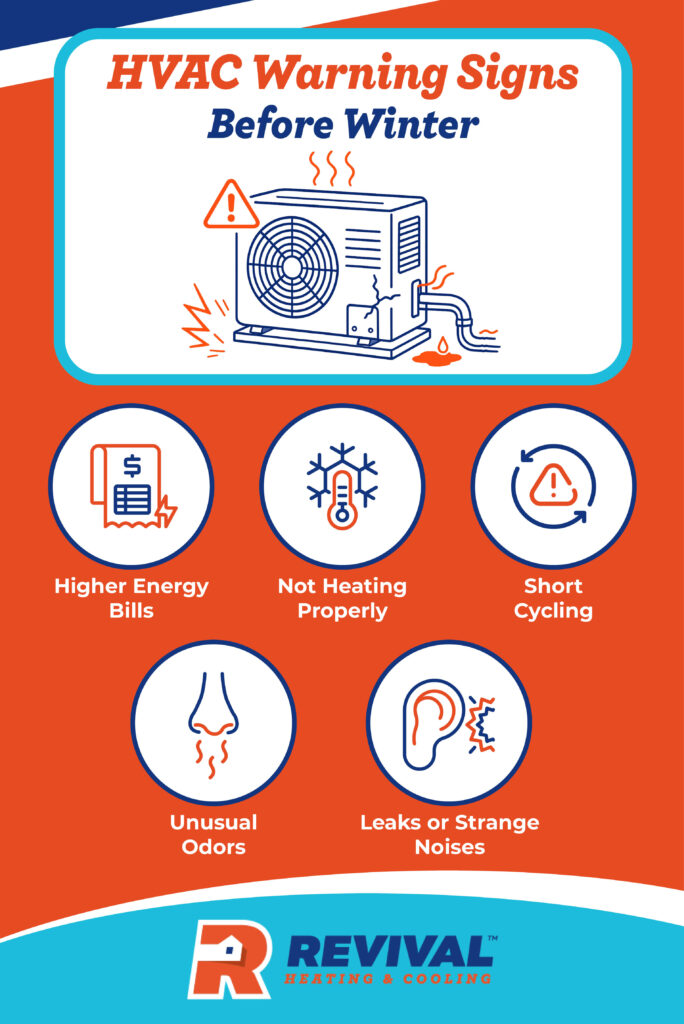
If you’re unsure which maintenance tasks to do, here are some signs your HVAC system may need attention before winter and is likely working harder than it should:
- Your heating bill is suddenly much higher than expected, with no obvious change in usage.
- Despite changing the air filter and installing a modern Wi-Fi thermostat, your system still isn’t heating the home as it should.
- The system is short-cycling, running more often than it should, or turning off before reaching the preset temperature.
- You notice a musty smell or a lingering gas-like odor inside your home.
- There are obvious signs of trouble, like leaks or water pooling, or strange noises coming from the unit.
The Role of Whole-Home Efficiency in Winter Comfort
Whole-home efficiency supports winter comfort by trapping heated air inside and reducing stress and strain on your system. Proper insulation, air sealing, and the use of high-efficiency equipment and programmable thermostats can help prevent cold spots, lower energy bills, and improve indoor air quality. The best way to achieve whole-home efficiency is through seasonal maintenance from Revival Heating & Cooling and by following our tips to keep your system running smoothly all season.
Prepare Your Home for Winter Comfort with Help From Revival Heating & Cooling
Revival Heating & Cooling focuses on providing Pacific Northwest homes with professional HVAC services, home and attic air sealing services, home comfort assessments, and energy efficiency audits. Our goal is to help you achieve true comfort in your home through HVAC efficiency. If you’re ready to prepare your home for winter comfort with help from Revival, contact us to schedule service today!