
AC Maintenance: What You Can DIY (And What You Shouldn’t)
Air conditioning maintenance is one of the best ways to improve energy efficiency, boost system performance, and extend the lifespan of your unit. And with homeowners having so many costs to keep up with throughout the year, it’s no surprise that many would prefer to DIY their AC maintenance. In this guide, we’re explaining which AC upkeep tasks are DIY-friendly and which ones you should always leave to a professional. Let’s take a look!
Why Regular AC Maintenance Matters for Home Comfort and Efficiency
Air conditioners are complex machines, with many moving parts working together to perform the system’s function of cooling your space. Like any other sophisticated system, these units need regular care and maintenance to work their best. The various components in air conditioners can become stuck, dirty, damaged, or loose, forcing the system to work harder to cool the space. Dust and debris can get built up in the system as well, restricting airflow and increasing energy bills as cooling power goes down.
By keeping up with regular AC maintenance, you ensure the system is clean, lubricated, and in good repair. Components work together smoothly, air flows through the system normally, and your home will stay cool all summer long, without the need for sky-high energy bills.
AC Maintenance Tasks Homeowners Can Do Themselves
Is it possible to DIY AC maintenance? The short answer is: Yes — sometimes! While not every AC tune-up task is suitable for DIY, there are a number of steps you can take to keep your system running smoothly and avoid common AC problems.
Replacing or cleaning your air filter
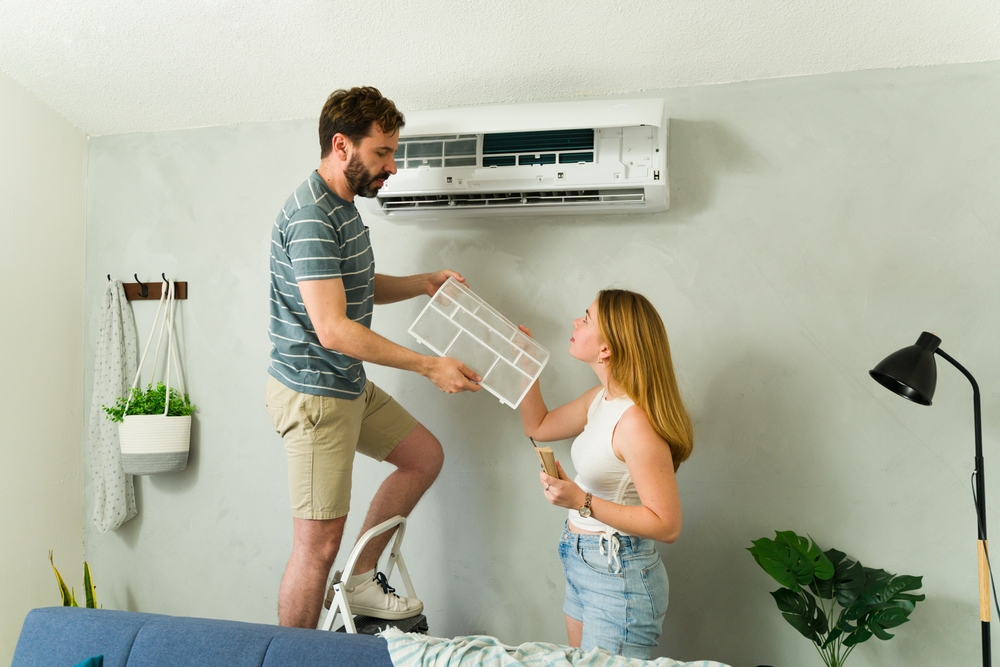
Your air filter is a key line of defense for your air conditioner, preventing dust and debris from entering the system, damaging the components, and polluting your indoor air supply. While there are different types of air filters with their own lifespans to consider, most systems need to have their filters replaced or cleaned every 30 to 60 days of use. This is normally a simple task to DIY, and can be completed in just a couple of minutes.
Keeping the outdoor condenser unit clear
Your outdoor condenser unit is responsible for pulling air into the home from the outside. If the air intake on the outdoor unit gets clogged with dust, dirt, grass clippings, or other debris, it will restrict airflow to the system, reducing performance and efficiency, and potentially damaging the system. Periodically cleaning this component is a great way to reduce the odds of an AC issue later on.
Checking and cleaning supply and return vents
AC supply and return vents (the vents found throughout the inside of your home) are responsible for delivering and taking in air, helping the system cycle and cool your home effectively. Over time, it’s normal for these vents to become dusty or greasy, blocking airflow and potentially reducing indoor air quality. We recommend inspecting and cleaning your vents once a year for optimal AC performance.
Monitoring your thermostat settings
Your thermostat is responsible for controlling your AC, which means an incorrect setting on the thermostat will lead to unpredictable behavior from the HVAC system. Make sure that your thermostat is set to ‘cool’ mode when needed and is dialed to the correct temperature for the conditions outside.
Checking for obvious warning signs
Homeowners should always be on the lookout for clear signs of an AC issue. These include:
- Rising energy bills with no change in usage
- AC shutdowns
- AC constantly running (long-cycling)
- AC constantly turning on and off (short-cycling)
- Water leaks
- Refrigerant leaks
- Excessive humidity inside
- Loud squeaking or other noises from the AC
- Foul odors in the home while using the AC
If you notice any of these warning signs, it’s time to call a professional for AC service.
AC Maintenance Tasks That Should Always Be Done by a Professional
Some HVAC maintenance jobs should always be left to a professional for the longevity of your system and the safety of your home.
Refrigerant level testing and adjustments
Refrigerant is the chemical responsible for cooling outdoor air before it’s sent into your home. While the refrigerant system is a closed loop, leaks can form in refrigerant lines over time, reducing AC efficiency and performance. Refrigerant is dangerous to handle without the proper tools and training, so you should always leave level testing and recharging to an experienced HVAC pro.
Electrical component inspection
If your air conditioner keeps losing power or tripping the circuit breaker, it’s time to have it looked at by a professional. This can be caused by damaged wiring, loose connections, improper HVAC sizing for your home, or overloaded circuits on your electrical panel. Have a professional inspect the system and ensure it’s safely powered.
Evaporator and condenser coil cleaning
Evaporator and condenser coils help your air conditioner deal with the moisture in the air, which is removed as it gets cooled by refrigerant. These can become dirty or frozen over time, but cleaning them yourself isn’t a good idea. Since these components can be delicate, you should always leave coil cleaning to an HVAC pro.
Blower motor and fan inspection
Your AC’s blower motor and fan are crucial for supplying your home with cool air. These are complex components, and most people don’t have the knowledge to accurately diagnose or repair issues with them. To avoid further damage to your system, leave motor and fan services to the experts.
Condensate drain inspection and cleaning
Your condensate drain pan and line help your air conditioner expel the water it pulls from the air. If a clog occurs somewhere in this system, it can create water leaks, mold growth, or even structural damage. To ensure the condensate drain system is working safely, you should have a professional inspect and clean it.
Signs Your AC System Needs Professional Maintenance
How do you know when it’s time to call for professional air conditioner maintenance? We recommend working with an HVAC technician if your AC is:
- Producing little or no airflow
- Putting out warm air
- Shut down entirely
- Making grinding, screeching, or banging noises while running
- Emanating a smoky or musty odor
- Shows signs of leaking water or refrigerant
We also recommend having your AC professionally serviced if it’s been a year or more since the last maintenance visit. This gives you peace of mind that the system is in good working order and ready to run reliably through the hot summer months.
Why Whole-Home Efficiency Matters for AC Performance
Your home’s comfort and efficiency don’t just depend on the condition of the HVAC system. Whole-home efficiency depends on a few key factors, including the home’s air balance, attic air sealing, and insulation. Even the best-performing air conditioner won’t keep your home cool if poor insulation and air sealing are affecting the temperature inside. For the best long-term results, AC maintenance should be done in conjunction with other efficiency measures, such as home energy and comfort assessments.
When to Schedule Professional AC Maintenance
The best time to schedule air conditioner maintenance is in the spring, just before you’ll be using the system daily in summer. This gives you peace of mind that the system is clean, repaired, and ready to run efficiently and reliably throughout the hottest months of the year.
Improve Cooling Performance with Help from Revival Heating & Cooling
If you’re ready to stop worrying about your air conditioner, energy bills, and comfort in the summer months, the team at Revival Heating & Cooling is here to help. Our AC maintenance services are efficient, effective, and comprehensive, helping you keep your system in the best possible shape without the need for DIY maintenance attempts. To get your home’s HVAC systems running perfectly again, schedule a service appointment today.