
Why a Home Energy Audit in Fall Saves Heating Energy Later
Are you getting tired of your energy bills climbing higher and higher each month? Ready to see how much you could save with a few HVAC upgrades and tune-ups? For homeowners looking to save on utilities and reduce their environmental impact, a home energy audit is the perfect solution. Read on to learn all about the home energy audits we offer at Revival Heating & Cooling, what they include, and how taking care of this task in the fall could help you save money on heating bills all winter long by achieving The 2° Standard.
Every Home Uses Energy Differently
No two homes perform exactly the same when it comes to energy use and comfort. In the Pacific Northwest, changing weather and temperature swings can make those differences even more noticeable. How well your home stays warm or cool depends on much more than your HVAC system alone.
There’s one thing that remains the same in every home, however: You’re paying to condition the air in your space. And if your insulation, walls, floors, attic, ductwork, air leaks, windows, and HVAC system aren’t working together properly, it means this air is escaping from your home, forcing you to pay again to re-condition it over and over again. If one part of the home isn’t performing as it should, your heating and cooling system may have to work harder to maintain a comfortable temperature. That’s where a home energy audit can help.
What Is a Home Energy Audit?
A home energy audit, also known as a home energy assessment, is our way of determining where your energy costs are going, and how to reduce them. Our technicians take a walkthrough of your home, assessing your home’s energy consumption in its current state. Once we have an idea of the current situation, we develop a strategy with specific steps to help increase your home’s overall energy efficiency. Energy auditors know where to look to find inefficiencies, and will help create a customized plan to help you keep your home comfortable while spending less on energy bills in the future.
Why Fall Is the Ideal Time for a Home Energy Assessment
Now that we know what’s included in an energy assessment, when’s the best time to get one? While there’s never a bad time to get your efficiency assessed, the best possible time is in fall. This is because we use more energy on home heating than anything else, which means improving efficiency before relying on your heater daily is the best way to save. Of course, there are a few HVAC upgrades to make in spring as well, so don’t feel the need to wait until next fall to take action for your home.
Common Sources of Heat Loss in PNW Homes
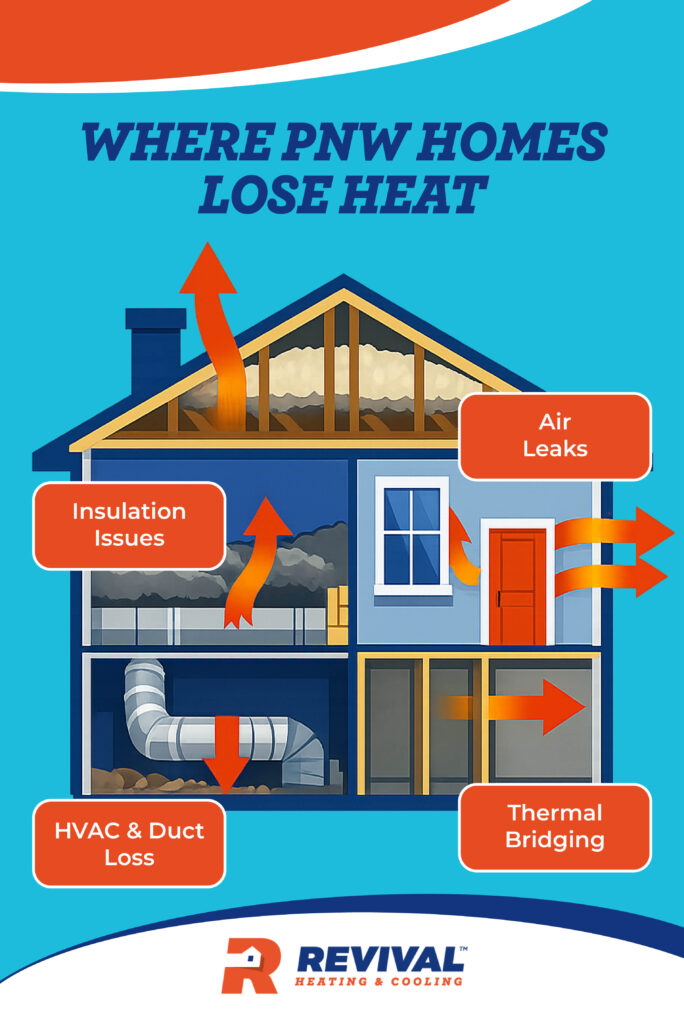
When we conduct home energy audits, there are a few areas that most often need upgrades, repairs, or maintenance to improve overall efficiency. These include:
Insulation
One of the main ways that heat escapes your Pacific Northwest home is through failing or inadequate insulation. Your insulation significantly affects HVAC efficiency. It’s responsible for holding warm air in and keeping cold air out. If your insulation isn’t functioning properly (such as if our damp climate allows moisture into the insulation), your heater will have to work much harder to keep your space warm, driving up energy bills.
Air sealing
Another common cause of heat loss in the PNW is inadequate air sealing. Poor sealing around doors and windows, thin, single-plane glass, and worn-out weatherstripping can all allow warm air to escape the home. This means your heater will need to run harder to keep the space at the set temperature, leading to higher energy bills.
HVAC issues
Another possible cause of heat loss is an issue with the HVAC system. One problem we see often is uninsulated HVAC ductwork running through cold attics or crawl spaces. Heat naturally radiates out of the ductwork in these areas, reducing the warm air that makes it into your home and increasing energy costs.
Thermal bridging
In very cold weather, the studs, headers, and wood joints that make up the structure of your home act as a thermal ‘bridge’ for heat to travel out of your home, bypassing the insulation. This can require significant home upgrades to solve.
How Air Sealing Reduces Heating Energy Loss
Air sealing is one of the best ways to keep your home warm and efficient in winter. By taking the time to reseal doors, windows, chimneys, and ducts, you’ll need less heating power to have a comfortable space. This means a warmer, more comfortable home that costs less on your monthly energy bills.
Why Attic Conditions Play a Major Role in Winter Comfort
As you probably know, warm air rises. This means that the warmth generated by your HVAC system naturally wants to head towards your attic. If your attic is improperly sealed, vented, or insulated, this heat can escape through your roof, leading to a cold space and astronomical energy bills.
Attic assessments are a key part of home energy audits. Once we’ve determined the condition of your attic, we can make suggestions that will help you save on energy without the need to replace your HVAC systems.
How a Home Energy Assessment Helps Your HVAC System Perform Better
The home energy assessment from Revival Heating & Cooling is your key to higher energy efficiency and improved home comfort. With the results from this energy audit, you’ll know everything you need to make smart, deliberate upgrades to your home. Whether you need additional insulation, air sealing services, ductwork insulation, or anything else, the results of this assessment offer a practical roadmap for homeowners looking to go more in-depth than simple energy saving tips.
Signs Your Home May Benefit From an Energy Assessment Before Winter
When is it time to get a home energy assessment? While we recommend this service to anyone interested in energy savings, there are a few signs that you should prioritize this service:
Thermostat Feels Wrong
Another common sign of issues with home comfort and efficiency is if the thermostat just doesn’t seem right. Your thermostat can only measure the temperature of that specific location in the home. So if it’s reading 70ºF, but the home definitely doesn’t feel like it’s at 70ºF, there’s a good chance that air leaks or ineffective insulation are causing issues in your home. A home energy audit can help your home’s actual conditions reflect the readout on your thermostat.
High energy bills
The most obvious sign that you need a home energy audit is if you’re overpaying on energy bills. If your monthly utility costs seem to keep rising despite no change in usage, it’s a sign that your system and home need some professional attention.
Inconsistent temperatures
Are certain rooms in the home consistently colder in winter and hotter in summer? It’s often a sign of issues with the airflow and insulation in these rooms. A home energy audit can give you the answers you need.
Signs of air leaks
If you notice drafts around doors and windows, it’s a sign that you need air sealing. Other signs of air leaks include lots of spiderwebs in certain areas, as spiders often prefer areas with steady air movement.
Ice dams on the roof
When snow melts on top of your roof only to re-freeze at the edge, it’s known as an ice dam. This is a telltale sign that heat is escaping through your roof at excessive rates.
Mold and moisture
If you’re noticing moisture or mold growth around your insulation, it’s a sign of a problem. Wet insulation indicates issues with the encapsulation of your home, which will have a major effect on energy efficiency as well.
Older homes
It’s normal for older homes to have issues with air sealing and insulation. If your home was built prior to modern HVAC efficiency codes (i.e., 1970s or earlier), a home energy assessment can be a great way to improve the comfort and efficiency of the space.
What Happens During a Professional Home Energy Audit
When you get a professional to perform a home energy audit on your property, the process usually begins from the outside. Your auditor inspects walls, windows, and eaves, looking for anything that might indicate a leak. From here, they’ll usually move to the attic, looking at the insulation and any potential air leaks that may be reducing HVAC efficiency.
Next, your pro will inspect the water heater and furnace, confirming that they’re working efficiently and effectively. This also includes an inspection of all ductwork (including basement connections), which can be another common source of heat and energy loss in the winter months.
Your auditor may also perform a blower door test, which helps them find air leaks in your home. All doors and windows will be closed, and a blower door machine is used to depressurize the air in your home. From here, the auditor will use a thermal camera and, in some cases, LiDAR scanning technology to find areas where cold air is leaking into the home, helping them get accurate load calculations that allow them to pinpoint air sealing opportunities for improved comfort and efficiency in each individual room. Altogether, the home energy assessment process takes anywhere from one to four hours, depending on the size of your home.
How Fall Energy Improvements Pay Off During Winter
Having your home’s energy efficiency assessed in fall is the best way to reduce your energy bills come winter. By investing in air sealing, insulation, and HVAC upgrades prior to the coldest months of the year, you’ll be prepared for the winter months, ensuring lower energy bills and a more comfortable space. Plus, the report you get from your assessment can be a great way to identify HVAC upgrades covered by Energy Trust of Oregon, helping you take advantage of state rebates and incentives while getting your home in alignment with The 2º Standard.
The 2° Standard: A Whole-Home Approach to Comfort
At Revival Heating & Cooling, we believe your HVAC system shouldn’t have to work harder than your home requires. That’s why we take a whole-home approach to comfort before recommending a repair, replacement, or new system.
We call this approach The 2° Standard. It starts with understanding how your home is performing through a home energy assessment and identifying opportunities in three key areas: sealing and insulation, heating and cooling, and indoor air quality. By looking at how these pieces work together, we can create a more complete path toward comfort and efficiency.
The goal is simple: help your home conserve more and need less energy to stay comfortable. Rather than treating the HVAC system as the only solution, The 2° Standard looks at the home as a whole. For homeowners in the Revive 365 Care Club, the first step is included with your membership. You’ll receive one complimentary Home Energy Assessment to help uncover where your home may be losing energy and where improvements could have the greatest impact on comfort and efficiency.
Work with Revival Heating & Cooling to get a Home Energy Audit for Your PNW Home
If you’re ready to say goodbye to sky-high energy bills and lacklustre heating in the winter months, the team at Revival Heating & Cooling is here to help. Our home energy assessments take the guesswork out of HVAC efficiency and performance, helping homeowners get more out of the systems they already have rather than spending money on new units unnecessarily. Don’t hesitate to schedule a home energy audit today!