
How Ductless Mini-Splits Work & When They Make Sense in Your Home
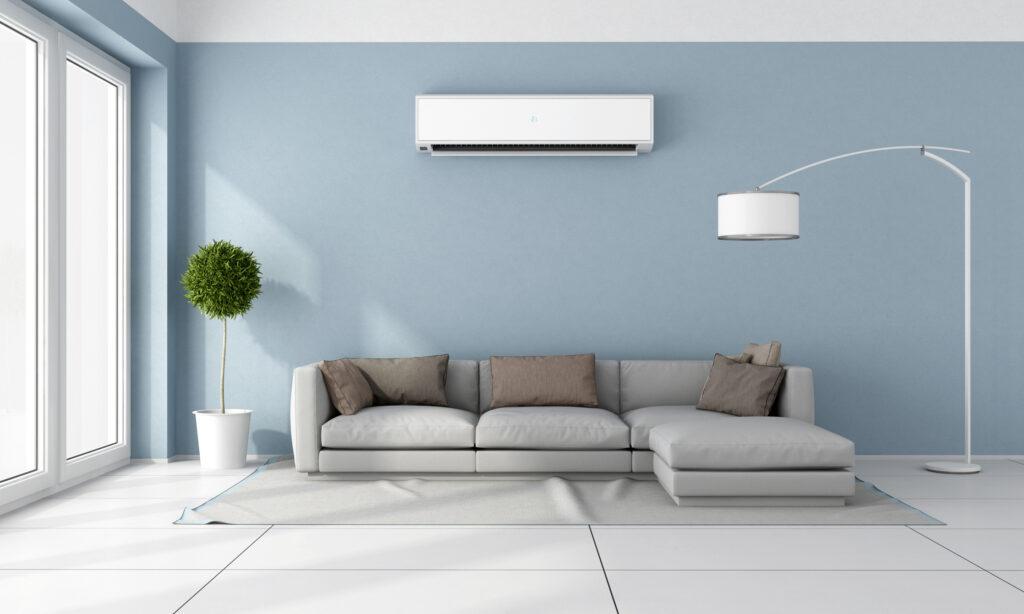
Ductless mini-splits are heating and cooling systems that work without traditional ductwork. In the PNW, many homeowners consider ductless options for home additions, older homes, and other spaces. These systems use heat pump technology to move heat in or out of the home, providing a high-efficiency solution. At Revival Heating & Cooling, we view ductless mini-splits as one option within a broader comfort strategy, because the right HVAC choice depends on how the whole home handles heat, airflow, and air leakage.
What Is a Ductless Mini-Split System?
A ductless mini-split system is composed of two main parts — an outdoor unit and one or more indoor air handlers. The outdoor unit connects to the indoor units, which are installed in designated zones and mounted on the wall, ceiling, or floor. There is a small conduit between them that holds the electrical wiring and refrigerant lines.
Each indoor unit serves a specific zone, which means one part of the home can run at a different temperature than another. That setup gives homeowners more precise control than a ducted system connected to a single thermostat.
How Ductless Mini-Split Systems Work to Heat and Cool Your Home
A ductless mini-split works by using refrigerant to transfer heat between indoor and outdoor spaces. The system circulates refrigerant between the indoor and outdoor sections, and that refrigerant absorbs and releases heat as conditions change. That heat transfer process makes mini-splits highly efficient, especially in ideal conditions.
In cooling mode, the indoor unit pulls heat from the air inside the room, sends it to the outdoor unit, and expels it outdoors. In heating mode, the process reverses, and the system draws heat from the outdoor air and brings it inside.
Benefits of Ductless Mini-Split Systems
Ductless mini-splits offer several comfort solutions for your home.
Zoned temperature control
Each indoor unit has its own thermostat or controller, so you can adjust the temperature in each room independently. Zoning lets your household set different temperatures for bedrooms, offices, bonus rooms, and other spaces, depending on how they’re used. Further, zoning can also improve consistency by adapting output to the needs of each space rather than trying to accommodate the entire home and rooms with varying heat gains or losses.
Energy efficiency
A mini-split AC unit avoids the duct losses that often come with older duct systems, especially for leaky or uninsulated ducts running through attics, crawlspaces, or garages. Modern mini-split systems also feature variable-speed compressors, advanced R-410A or R-454B refrigerants, and other features that significantly upgrade energy efficiency. Zoning also improves efficiency, since you can choose not to cool or heat zones that aren’t in use and reduce energy consumption.
Flexible installation options
Indoor units come in several configurations, including wall- and ceiling-mounted options that suit varying needs. That flexibility helps for homes with limited square footage, since a split AC unit can fit areas where larger systems may not be practical.
Quiet operation
Most mini-split system components run more quietly than traditional forced-air systems and window units. The noisiest part of the system stays outside, while the indoor unit usually operates with low fan noise, about 19 to 45 decibels, or no louder than a whisper. Quiet, non-disruptive operation makes mini-splits a good fit for bedrooms, offices, nurseries, and other spaces.
When a Ductless Mini-Split Makes Sense for Your Home
A ductless air conditioner system works best in homes and rooms in specific scenarios, such as:
- Homes without existing ductwork: Many older homes were not built with ductwork, and so they often rely on window AC units, portable heaters, and other systems. By avoiding ductwork, a mini-split installation also limits major retrofits and added costs.
- Home additions or renovations: A new addition is generally outside the reach of the original HVAC system, and it can strain the existing equipment if it’s no longer sized for your home’s cooling needs. A mini-split AC can condition that space on its own and adapt to how you actually use it.
- Rooms that are always too cold or hot: Some rooms heat up or cool faster because of window exposure, poor insulation, or their location in the house. Zoned mini-split systems help distribute cool or warm air evenly throughout your home, eliminating hot or cold spots.
- Households looking to improve energy efficiency: A ductless setup reduces wasted energy by providing conditioning to the rooms people use most.
Ductless Mini-Splits vs. Traditional Heat Pump Systems
Ductless mini-splits and traditional heat pumps offer similar functions and benefits, but they operate in different ways.
Traditional heat pumps
A traditional heat pump connects to ductwork and sends heated or cooled air through supply vents across the home. It usually treats the house as one larger comfort system.
Ductless Heat Pumps
A ductless heat pump delivers heating and cooling to specific rooms through individual indoor air handler units rather than ducts, enabling zone-based control and avoiding the energy loss associated with leaky or poorly insulated ducts.
Why Home Efficiency Matters
A mini-split can improve comfort, but equipment alone can’t fix every comfort problem in your home. Insulation levels, attic conditions, air leakage, and poor airflow all affect how your home manages temperatures and humidity. If a room loses heat quickly in winter or spikes in the summer, your system has to work harder to keep up.
At Revival Heating & Cooling, we focus on your whole house to determine the ideal solution. Our approach assesses how much heating and cooling your home actually needs before we size equipment. When you reduce the load through insulation, air sealing, and better airflow, your HVAC system can provide even comfort.

Professional Ductless Mini-Split Installation Matters
Installation quality affects how well your ductless mini split performs from the start. Mini-split systems require accurate sizing, and the indoor heads must be mounted to match the layout, design, and airflow of each space. Too large, and the equipment may cycle too frequently. If it’s too small, your AC mini-split may run longer than it should while struggling to keep up with your thermostat settings.
Ductless Mini-Split Services for Homes in the Pacific Northwest
At Revival Heating & Cooling, our work focuses on sizing and performance. Our services in the PNW include:
- Ductless mini-split installation
- Ductless system replacement
- Ductless heat pump repairs
- Ductless system maintenance
To ensure proper sizing, energy efficiency, and system longevity, we consider your home and the seasonal factors that influence HVAC needs. This approach is consistent with how we view HVAC in general — making your home need less, then installing the right-sized, energy-efficient system.
Improve Home Comfort With Help From Revival Heating & Cooling
Ductless mini-splits make sense in many PNW homes, but they work best when part of a whole-home comfort strategy. If you’re considering a ductless mini-split, connect with us at Revival Heating & Cooling to help you evaluate your space, check insulation and airflow issues, and determine how system sizing fits into your home. Contact us today to schedule a consultation with Revival Heating & Cooling. We offer ductless mini-split services throughout Vancouver, Portland, and other Oregon and Washington communities.