How Home Insulation Affects Your HVAC Efficiency
In the Pacific Northwest, we experience damp winters, mild summers, and extended spring and fall seasons. Home insulation plays a key role in determining how hard your HVAC system must work to keep your household comfortable. If you suspect your home is lacking insulation, Revival Heating & Cooling can perform a home comfort assessment to determine if your home needs insulation, air sealing, or if there’s something else that would help to improve your HVAC efficiency. Read on to learn more about insulation’s role in HVAC efficiency.
Why Insulation Plays a Bigger Role Than Most Homeowners Realize
Your HVAC systems, even a high-energy-efficient air conditioner, can’t overcome airflow and efficiency issues caused by poor insulation. For example, because hot air rises, a lack of insulation can cause a hot attic but a cold home. Conditioned air will also escape your home more quickly through your walls, windows, and roof.
What Insulation Actually Does in Your Home
Insulation’s job is to slow the transfer of heat between your conditioned indoor spaces and the outdoors. When insulation performs well, HVAC systems can maintain steady and even temperatures throughout the home.
During the winter seasons, insulation helps keep the warmth generated by your heating system inside your home rather than allowing it to escape through your walls, ceiling, and floors. In the summer, that same insulation prevents outdoor heat from penetrating your home, reducing the workload on your air conditioning system.
This is different than air sealing. Insulation resists heat flow, while air sealing stops actual air movement through cracks, gaps, and penetrations in your home’s structure. Usually, when you have a drafty home, the issue is due to the quality of both your insulation and your home’s air sealing.
Common Insulation Problems in PNW Homes
There are a few common insulation problems we always find during our home comfort assessments:
- Moisture infiltration: Our region’s persistent rain and humidity significantly reduce insulation’s effectiveness over time, especially in attics and crawl spaces. This can lead to dangerous mold growth.
- Outdated insulation: Many older homes were built when insulation standards were lacking and highly-flammable cellulose insulation was the norm.
- Energy waste: Without the proper type and amount of insulation, your HVAC system works harder, leading to higher energy bills.
- Gaps and uneven coverage: Wall, floor, and attic insulation that leaves spots where heated or cooled air can easily escape or enter can exacerbate climate control inefficiencies.
How Poor Insulation Impacts HVAC Efficiency
The longer your HVAC system runs, the more energy it uses. Longer system run times are the most obvious consequence of poor insulation. Your heating system must cycle on more frequently and stay running longer to compensate for the natural heat loss occurring through your under-insulated home. This can be due to a lack of insulation or older insulation with a lower R value.
During cold snaps, poorly insulated homes likely have to continuously run their heating systems to keep up with demand. Air conditioners face similar challenges during hot weather, working overtime to remove heat that’s constantly infiltrating the home through gaps and insulation inefficiencies.
When your system runs more frequently and for longer periods, every component, from the blower motor to the compressor, experiences accelerated wear and tear. This will lead to more frequent repairs, shortened equipment lifespan, and ultimately an inefficient HVAC system.
The Relationship Between Insulation, Air Sealing, and HVAC Performance
The link between insulation, air sealing, and your HVAC’s performance is tied together. When one is lacking, you will start to see and feel the signs that others are as well. Insulation works best when paired with comprehensive air sealing, particularly in the attic, where the greatest opportunities for improvement typically exist.
The attic serves as a major thermal and pressure boundary in your home, and when air leaks weaken your insulation’s performance, your entire HVAC system suffers. The same goes for your home’s walls and the quality or lack of air sealing and insulation in them.
Our home insulation services at Revival Heating & Cooling take a whole-home approach. This means we look at all of your home’s insulation, checking for any gaps, and seal any cracks and gaps to guarantee your HVAC system works to heat or cool your home to the best of its ability.
Insulation’s Role in Right-Sizing HVAC Systems
When determining the correct size of HVAC system needed for your home, a technician will perform something called a Manual J Load calculation. This important step assesses all areas and factors that contribute to heat and cooling gain and loss in your home, including the insulation. Your home’s insulation levels directly affect HVAC load calculations.
If your home has too little insulation, this could result in an oversized unit, which will significantly drive up your energy bills. As an HVAC and insulation expert, Revival Heating & Cooling differs from equipment-focused contractors. Our emphasis is on correctly sizing HVAC systems based on actual thermal loads rather than simply replacing equipment with the same capacity.
Signs Insulation May Be Affecting Your Home’s Comfort
There are several common signs that your home’s insulation may be directly responsible for your home’s comfort issues, rather than your HVAC system.
- Cold and hot spots through the house: If some rooms feel hotter or colder than others, despite your thermostat working properly, it suggests that your insulation’s thermal boundary is lacking.
- Cold floors and ceilings: If you feel these, especially in the winter, it can indicate heat loss through under-insulated surfaces.
- Constantly running HVAC system: An HVAC system will run longer and more frequently to compensate for heat and cooling loss due to a lack of insulation.
These comfort issues, while frustrating, provide valuable clues that Revival Heating & Cooling can use to find the issue and remedy your home’s heating and cooling efficiency.
Determine Your Home’s Insulation Needs with a Comfort Assessment
Revival Heating & Cooling’s home comfort assessments will quickly determine your home’s insulation needs. Using advanced thermal cameras, blower door devices, and computer home modeling software, we measure everything from your home’s air leakage and attic insulation, assigning them numbers based on something we call the 2° Standard — our foundation for an objective review of your home’s comfort and efficiency.
Our process involves four steps:
- Step one: Identify. Instead of using opinions, we lean on a standard of measurable goals to pinpoint where and how much a home needs help — and data for measurable verification of improvements.
- Step two: Conservation. Once areas of improvement are identified, a homeowner can choose to make selective or comprehensive changes to reduce the home’s need for heating and cooling and to use less energy.
- Step three: Efficiency. Systems can be upgraded to high-efficiency systems to minimize energy usage.
- Step four: Generation. After the first three steps, Revival Heating & Cooling can add energy generation systems, like solar batteries, to limit energy expenses.
Our solutions for insulation and HVAC issues are always based on data, not assumptions.
Improving Insulation for Long-Term Comfort
Effective insulation improvement starts with sealing gaps and air leakage problem areas before adding insulation. Addressing moisture issues is also equally critical in our damp climate.
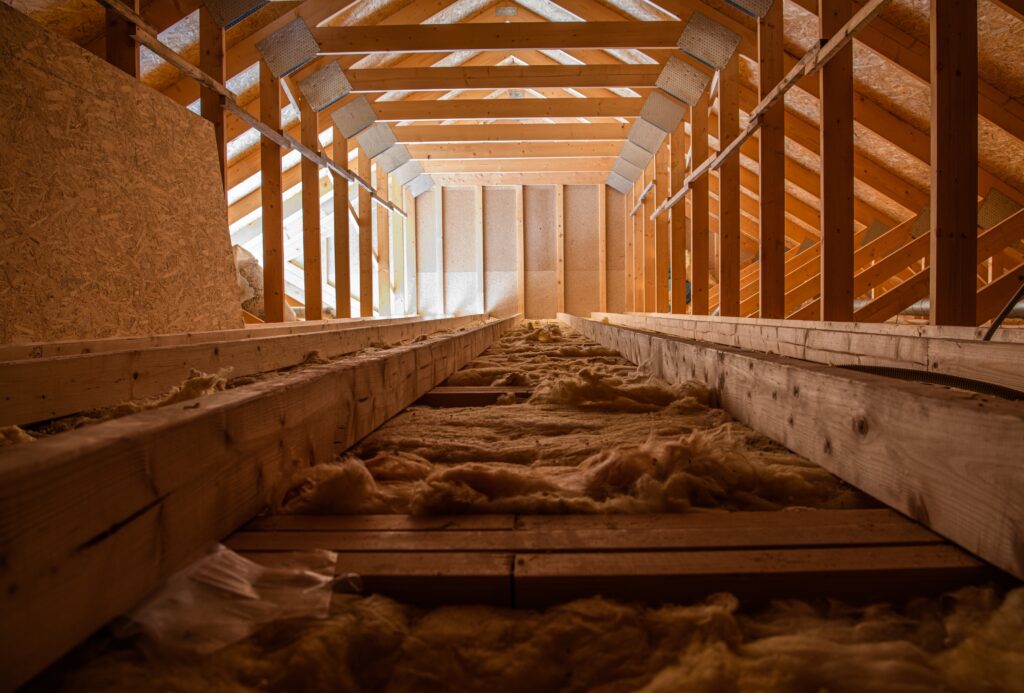
Attic insulation typically delivers the strongest return on investment, as attics represent the area where heat loss and gain are most severe. However, simply adding more insulation on top of existing material without addressing underlying issues wastes money and limits results.
Revival Heating & Cooling takes a preventive approach, fixing already existing issues of heat and cool loss, before adding more insulation. After our services, better insulation supports quieter HVAC operation, steadier temperatures, and improved comfort year-round.
Insulation Is the Foundation of HVAC Efficiency
Your home’s insulation truly serves as the foundation of your HVAC unit’s efficiency. Understanding this important relationship will help you make smarter decisions about home comfort investments. With our damp climate, keeping ahead of insulation issues will always result in a more energy-efficient system and a comfortable home.
Contact Revival Heating & Cooling For A Home Comfort Assessment and Any Insulation Needs
If you are experiencing an inefficient HVAC system or uncomfortable temperatures throughout your home, the issue could actually be with your home’s insulation quality and coverage. With our home comfort assessment, Revival Heating & Cooling will look at every factor affecting your home’s air to help you determine the best solution for rejuvenating your comfort. Contact us today for a consultation and your first step to improving your home comfort.