
Why HVAC Maintenance Is Key to Cutting Energy Bills
Plenty of homeowners have suffered price shock when they’ve opened up their utility bills. What might surprise many, though, is that the source is often one thing. HVAC systems in most homes account for between 40 and 50% of the household’s energy consumption. The good news is that HVAC maintenance can make a notable difference in your energy bills.
The Potential Culprits
A handful of common culprits tend to cause most of a household’s HVAC inefficiency. Fortunately, most of these are easily addressable with a little bit of maintenance.
Clogged or Dirty Air Filters
One of the reasons that our company strongly encourages customers to regularly replace their HVAC filters is that they won’t find a better bang for their buck. Dirty filters can cause reductions in efficiency as large as 15%, especially if your HVAC has an air purification system with HEPA and activated carbon filters.
Simply replacing the filters with fresh ones on a regular schedule will improve airflow and system efficiency. Likewise, most homeowners can perform the work themselves. Notably, you will want to make sure that you match the filters to the equipment. Running the wrong filter on a system can make efficiency worse and shorten system life. For example, you shouldn’t install a HEPA filter on a furnace that only uses standard models.
The replacement schedule for basic fiberglass filters is typically once every three months. HEPA filters and other advanced solutions have schedules of once every six to 12 months. Bear in mind that your system may require a more frequent schedule if your household has many pets or one pet with lots of hair. The same applies if anyone smokes indoors or if your locality has above-average pollution levels.
Refrigerant Loss
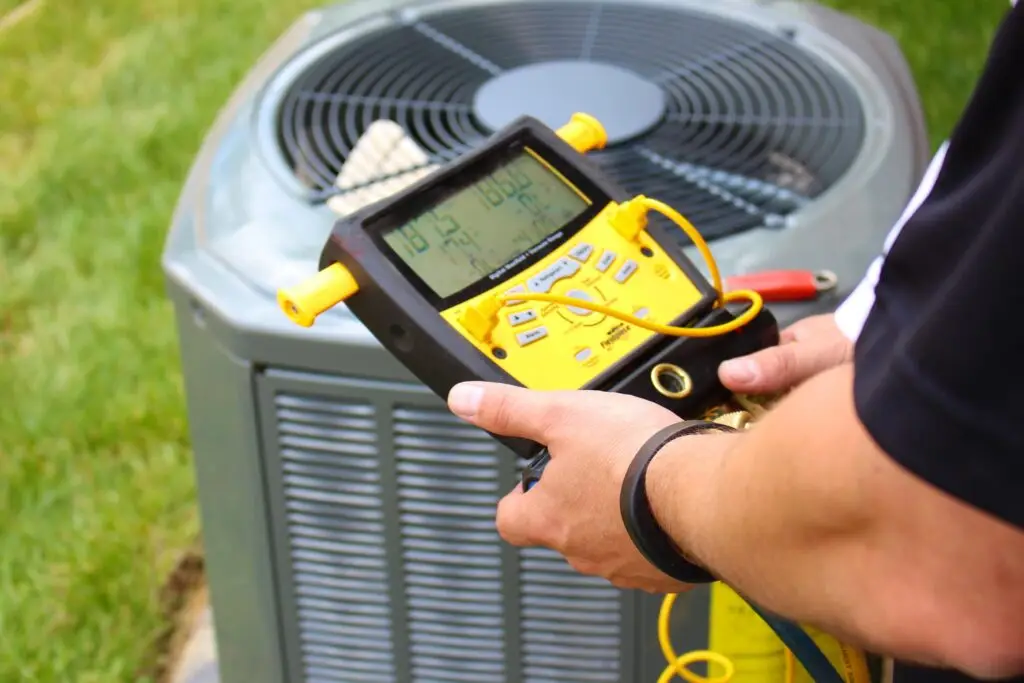
Refrigerant leaks can dramatically reduce AC or heat pump efficiency. Worse, refrigerant losses can occur for very simple reasons. For example, the vibration of the system can loosen fittings and let refrigerant out. Recharging an HVAC’s coolant isn’t a DIY job. Our technicians have the tools and training needed to safely test and recharge refrigerant lines. Refrigerant leaks typically give off a chemical smell, so if you spot a problem, let us know immediately.
Dirty Coils
Air conditioning systems and heat pumps use coils to transfer heat. However, dirt, air pollution, and debris can foul these coils. Particularly, the coils on the outdoor portion of a unit are prone to fouling. If the issue gets out of control, the coils may ice over because the heat exchange isn’t happening fast enough.
Homeowners can lightly spray coils with a hose. However, the best thing a homeowner can do is to keep the area clear of possible sources of dirt. Keep the area free of bushes and trees. Bag grass clippings rather than ejecting them. Clean up dirt and debris in the area. Drive off any animals that might get into the system, particularly squirrels.
If the coils are fouled, our technicians can clean them. We use professional-tier cleaners that can clear anything that might stick to the coils.
System Wear
HVACs have plenty of mechanical and electrical components, and these all suffer some degree of wear over time. The compressor is the heart of the AC, and it will wear out over time. A failing compressor strains all the other components. Consequently, replacing it promptly when it begins to fail is important. Our technicians always check the compressor’s condition as part of our pre-summer tune-up schedule for customers.
Blower motors and fans in the HVAC will also wear out with time, too. Annual lubrication as part of a checkup should delay this process.
Your HVAC likely also has belts to power internal components. Belts loosen with age, leading to efficiency and performance problems. Testing the belts once a year is a good way to determine if it’s time to replace them. This is another part of an annual HVAC tune-up.
HVACs use large capacitors, too. These capacitors help power the compressor, giving it the kick of electricity it needs to start each cycle. If the capacitors fail, the system may not work at all. Testing the capacitors annually goes a long way toward protecting other components.
Corrosion is also the enemy of your HVAC. Corroded components can cause electrical faults. They even encourage fuel leaks in gas and oil systems. Corrosion is usually visible as rust with the accompanying yellow, orange, or red discoloration on metal surfaces.
Out-of-Spec Settings
Something as simple as a difference between the real temperature and your thermostat’s reading can cause significant inefficiency. Depending on the HVAC and thermostat models, the difference should be between one and three degrees. If it varies more, our technicians can tune the system to get it aligned. If it isn’t correctable, we can check or replace the thermostat or the HVAC control board.
Clogged Condensate Drains
HVACs produce condensation because they remove a certain amount of humidity from the air. If your house has a dehumidifier, then there could be significantly more moisture to remove. If a condensate drain clogs, it can prevent the system from operating as efficiently as possible. We can flush the drain and get things moving again.
Spotting Signs of HVAC Efficiency Decline
While the easiest solution is to schedule an annual or even biannual checkup for your HVAC, it still pays to know the signs of trouble. Foremost, your utility bills provide valuable clues. If your heating or cooling bill has risen recently without an obvious explanation, then you should be suspicious.
Note how often your HVAC cycles. An AC with a failing compressor may short cycle and run more often because internal shut-offs are preventing it from running a full cycle. Similarly, shut-offs in the heating system could turn it off if there are signs of a gas leak. A thermostat problem could cause cycling issues, too.
Use your senses as well. An inefficient gas heating system could have unspent gas that leaves a lingering smell. Likewise, a failing AC system or dehumidifier might leave a musty smell because mold growth is happening. Look for visible signs of trouble, such as icing on coils or pooling near the AC.
Revival Heating & Cooling is the go-to HVAC company for many people in Portland, OR, and the surrounding areas. We offer great deals on our website, including coupons and promotions. Our technicians can perform energy audits and deliver quick answers about HVAC efficiency.
Households trust us because we are a top-rated company that’s fully licensed. We put our customers’ health and safety first, and we work hard to keep their heating and cooling systems running as efficiently as possible. We have been in the industry for more than 20 years, too. Our technicians want you to have total peace of mind about your HVAC when they’re done with every project. If you’re worried about the energy efficiency of your Portland home’s HVAC, contact Revival Heating & Cooling right away to schedule a maintenance appointment.